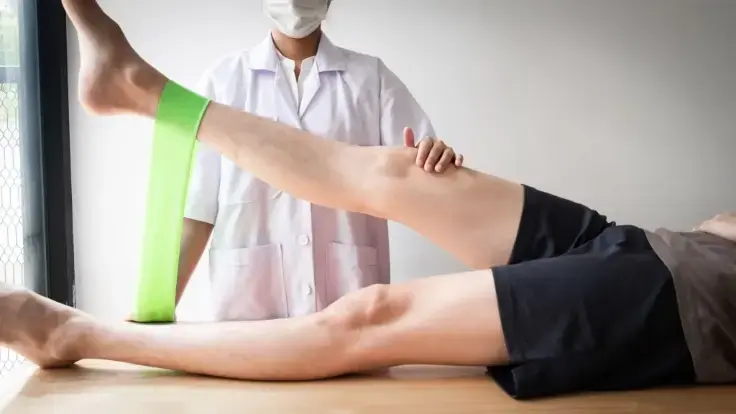
If you’re looking for a cushy desk job where you answer emails all day, keep scrolling. But if you want a career where you literally teach people how to walk again, recover from brutal injuries, or live without chronic pain—welcome to physical therapy.
I’ll be completely honest with you right upfront: the journey is a full-on marathon. We are talking about a solid 7 to 8 years of higher education, endless clinical hours, and more anatomy flashcards than your brain feels capable of holding.
Here is the real, unfiltered breakdown of how to get from your freshman year of college to walking into a clinic as a licensed Doctor of Physical Therapy (DPT).
Step 1: The Undergrad Foundation (And Surviving Chemistry)
First things first: you need a bachelor’s degree. People ask all the time, "Does it matter what my major is?"
Technically, no. You could major in Music Theory if you really wanted to. However, if you pick something outside the sciences, you’ll spend two extra years cramming prerequisite courses. Save yourself the headache and pick a major that covers your bases:
-
Exercise Science or Kinesiology: The absolute best head start for understanding biomechanics and movement.
-
Biology / Human Biology: Great for deep-diving into human physiology and lab work.
-
Psychology: Underrated, but wildly useful—because half of being a good PT is understanding patient behavior and motivation.
Hard Truth: Your science GPA matters a lot. Admissions committees for DPT programs obsess over how you handled Anatomy & Physiology I & II, General Chemistry, Physics, and Statistics. Aim for B’s or higher in all of them. If you stumble in Chemistry, don't panic—just consider retaking it to protect your GPA.
Step 2: Logging Shadow Hours (Without Being Annoying)
You can't just tell an admissions committee that you "love helping people." You have to prove you actually know what a physical therapist’s day looks like.
Most graduate programs require anywhere from 50 to 150+ observation hours. Here is my biggest piece of advice: do not log all your hours in just one place.
-
Spread them out: Spend 40 hours in a flashy outpatient sports clinic, sure. But then go spend 30 hours in an acute care hospital ward watching someone stand up for the first time after a hip replacement. Try an inpatient rehab facility working with stroke survivors, or a pediatric clinic.
-
Treat it like a long interview: The licensed PTs you shadow aren't just giving you signature hours—they are the people who will write your letters of recommendation. Show up on time, ask thoughtful questions when patients leave, and keep your phone in your pocket.
Step 3: Tackling PTCAS and GRE Stress
By your junior year of college, it’s time to start prepping your actual applications.
Almost every accredited program in the U.S. uses the PTCAS (Physical Therapist Centralized Application Service). It’s basically the Common App for PT school—you upload your transcripts, shadow hours, recommendation letters, and essays in one portal and send them off to multiple schools.
What about the GRE?
Plenty of programs still require the Graduate Record Examination. Focus your prep on getting solid scores in verbal reasoning and quantitative sections. However, more and more schools are quietly moving toward GRE-optional policies—so double-check your target schools' requirements before spending months studying for it.
The Personal Essay Tip
When writing your personal statement, avoid cliché openings. Skip "I've wanted to be a PT since I tore my ACL in high school." Instead, focus on a specific moment during your shadow hours that changed how you view patient care or clinical problem-solving.
Step 4: Surviving the 3-Year DPT Pressure Cooker
Once you get that acceptance letter, celebrate! Then take a deep breath, because graduate school is a whole different beast.
A DPT program takes about 3 years to complete. Make sure any program you attend is accredited by CAPTE (Commission on Accreditation in Physical Therapy Education)—if it isn't, you won't be allowed to sit for your licensing exam.
Year 1: Gross Anatomy (Cadaver Lab) ➔ Neuroanatomy ➔ Kinesiology
Year 2: Orthopedics ➔ Cardiopulmonary Rehab ➔ Pediatrics & Geriatrics
Year 3: Full-Time Clinical Rotations (30-40 weeks in real clinics)
Year one is heavy on foundational classroom work—including full human cadaver dissection in gross anatomy. It's intense, it smells like formalin, and you’ll never look at a chicken breast the same way again.
By years two and three, you transition into hands-on clinical rotations. You'll spend months working full-time in real hospitals and clinics under a supervising Clinical Instructor (CI). This is where textbook theory meets real, unpredictable human bodies.
Step 5: The NPTE Board Exam and Licensing
Graduating with your DPT feels amazing, but you aren't legally a physical therapist until you pass the National Physical Therapy Examination (NPTE).
-
The Test: It’s a 5-hour, 225-question computer exam administered by the FSBPT. It tests clinical judgment, safety, and diagnostic knowledge.
-
How to Prep: Give yourself 2 to 3 months of dedicated study time. Treat it like a job, and use official PEAT practice exams to gauge your readiness. You need a scaled score of 600 to pass.
-
State Paperwork: Once you pass, you'll apply to your specific state's licensing board. Most states also require a background check and a quick Jurisprudence Exam (testing you on local healthcare laws and practice acts).
Step 6: Optional Residencies & Finding Your Niche
Once you hold that license, you can step straight into a job at an outpatient clinic or hospital making a solid income. But if you fall in love with a specific field, you can opt for a 1-year clinical residency.
Residencies offer intense 1-on-1 mentorship in specialized areas like:
-
Sports Medicine & Athletic Rehab
-
Neurologic Rehabilitation (Parkinson's, spinal cord injuries)
-
Pediatric Physical Therapy
After completing a residency or logging a few thousand hours in a specialty field, you can sit for board certification exams through the ABPTS (like becoming a Certified Orthopedic Clinical Specialist).
Final Thoughts: Is the Grind Worth It?
I won't pretend it's easy. It’s 7 years of sweat, late-night studying, and serious financial investment.
But the very first time a patient walks into your clinic in tears from chronic pain and leaves six weeks later hugging you because they can finally play with their grandkids again? There is genuinely no feeling in the world like it.